

When most people picture flood protection, they picture sandbags. Stacked along curbs, piled around doorways, and trucked into neighborhoods before a storm, sandbags have been the default flood defense in the United States for more than a century. They are familiar, they are cheap to acquire, and they are everywhere.
But familiar does not mean effective. For most property owners, using sandbags for flooding is one of the most labor-intensive, time-consuming, and unreliable defenses available. Modern flood barriers have changed the math completely, and once you compare the two options side by side, the case for upgrading becomes hard to ignore.
How Sandbags for Flooding Actually Work
Sandbags are simple. A burlap or polypropylene bag is filled with sand, stacked in a pyramid pattern along the area you want to protect, and relied on to slow or divert oncoming water. They have been used for so long because the materials are cheap, the technique is straightforward, and they require no specialized equipment.
However, sandbags for flooding have serious limitations that often only become obvious in the middle of an actual event:
- They are extremely labor-intensive – Filling, transporting, and stacking sandbags takes hours and significant physical effort. A small business or homeowner trying to protect a property the day before a storm often runs out of time, energy, or volunteers.
- They are not watertight – Sandbags slow water but do not seal it out. Water seeps through the gaps between bags and through the bags themselves, especially during prolonged events.
- They have limited height – Building a sandbag wall higher than two or three feet requires a wide base and a lot of bags, which most properties cannot stage in time.
- They are single-use – After a flood event, sandbags are typically contaminated with floodwater, sewage, and chemicals, which means they must be disposed of as hazardous waste.
- They damage property – Wet sand can stain, scratch, and erode surfaces. Removing thousands of soaking bags after a storm often causes its own cleanup headaches.
- They create environmental cleanup – Disposal of contaminated sandbags is regulated in many jurisdictions and adds cost to every event.
Sandbags for flood protection are better than nothing, but for most properties, they are not a serious long-term flood defense strategy. They are an emergency stopgap.
How Modern Flood Barriers Work
Modern flood barriers are engineered products designed to protect specific buildings and openings reliably, repeatedly, and with far less labor. There are several different types of flood barriers on the market, but most fall into one of these categories:
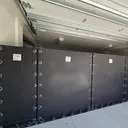
- Flood panels – Custom-fabricated, watertight panels that install over doorways, garages, and loading docks when a flood event approaches. A small team can deploy them in minutes.
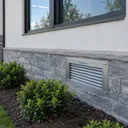
- Flood gates and flood doors – Permanent or semi-permanent installations that provide 24/7 protection without requiring deployment during an emergency. Swing-hinged gates allow daily use and seal when needed; permanent flood doors replace standard entry doors with watertight, code-compliant versions.
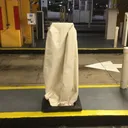
- Passive automatic floodgates – Self-activating barriers that rise on their own when floodwaters reach a trigger point, requiring no electricity, no manual operation, and no staff intervention.
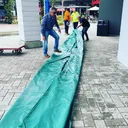
- Water-filled and aqua-fabric barriers – Portable, perimeter barriers that deploy up to 100 times faster than sandbags and require no heavy equipment. A single person can deploy an aqua-fabric barrier across a large opening or perimeter in minutes.
These products are engineered, tested, and certified. FRA Flood Panels, for example, are tested to handle Category 5 hurricane conditions and have protected properties through multi-foot storm surge events that would have overwhelmed any sandbag wall.
Sandbags vs. Flood Barriers: The Real Comparison
Here is how the two options compare on the factors that take priority when a flood is imminent:
- Deployment time – Sandbags: hours of physical labor per opening. Flood barriers: minutes, often by one or two people.
- Protection performance – Sandbags: water seeps through and around them. Flood barriers: watertight to engineered standards.
- Reusability – Sandbags: single-use, contaminated after the event. Flood barriers: designed for repeated deployment over the life of the building.
- Cleanup – Sandbags: hazardous waste disposal, property damage, sand cleanup. Flood barriers: clean, packed, and stored for next time.
- True cost over five years – Sandbags: continual labor, materials, disposal, and reordering after every event. Flood barriers: one-time investment with low maintenance cost.
- Availability under pressure – Sandbags: often sold out when you need them most. Flood barriers: already on site and ready.
- Insurance value – Sandbags: limited impact on premiums. Flood barriers: documented flood protection can help lower insurance costs and improve underwriting.
Why Property Owners Are Making the Switch
Across the country, businesses, hospitals, hotels, condo buildings, and homeowners are replacing sandbags for flooding with engineered flood barriers, for one straightforward reason: the math works. The labor cost of sandbagging a property repeatedly over five or ten years, combined with the disposal cost, property damage, and unreliable performance, ends up far exceeding the one-time investment in a proper flood protection system. Add in the protection of inventory, equipment, and operations, and the case becomes even clearer.
FRA’s clients have documented saving millions of dollars in flood damage during single hurricane events, where sandbags would have been completely overwhelmed. That is the kind of return that makes the upgrade an easy decision.
The Bottom Line
Sandbags for flooding had their place in a different era. Today, modern flood barriers offer better performance, faster deployment, lower long-term costs, and reusable protection that is ready when you need it. If your property has any meaningful flood exposure, it is time to retire the sandbags.
To learn how FRA can replace your sandbag strategy with a proper flood protection system, contact our team today to schedule an on-site assessment.