


One of the first questions property owners ask when researching flood protection is the obvious one: what do flood barrier systems actually cost? It is a fair question, and an important one. Flood protection is a significant investment, and property owners deserve a clear answer before they commit.
The honest answer is that flood barrier systems vary widely in cost because they are tailored to the property they protect. A single residential doorway and a multi-acre municipal facility are not in the same conversation. But there is a clear framework for understanding what drives cost, what factors most affect price, and how to think about the return on investment. Here is a transparent breakdown.
What Drives the Cost of Flood Barrier Systems
Every flood barrier system is priced based on a handful of specific variables. Understanding these helps you ask better questions and compare quotes intelligently.
- Number and size of openings – Every doorway, garage, loading dock, and equipment access point that needs protection adds to the total cost. Larger openings cost more than smaller ones because they require more material and engineering.
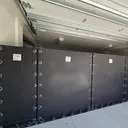
- Type of barrier selected – Removable flood panels, permanent flood doors, swing-hinged flood gates, passive automatic floodgates, and aqua-fabric barriers all carry different price points. Permanent and automatic systems generally cost more upfront but eliminate ongoing deployment labor.
- Required protection height – A barrier rated for 2 feet of water is fundamentally different from one rated for 10 feet. Higher protection heights require stronger engineering, more material, and more rigorous testing.
- Custom fabrication needs – Off-the-shelf products are cheaper but rarely fit real-world openings well. Custom-fabricated flood barrier systems cost more, but they actually work.
- Site complexity – Properties with unusual architecture, historic features, tight access, or coordination across multiple buildings require more design and installation time.
- Certifications and testing – Products tested to FEMA, ANSI, and other recognized standards command higher prices because the engineering, third-party testing, and quality control behind them is more rigorous.
- Installation and integration – Anchoring, sealing, and integrating barriers with existing architecture is skilled work. Cutting corners here is where flood protection fails.
- Ongoing maintenance – Some systems require almost no ongoing maintenance, while others need periodic inspection, seal replacement, or refresher training.
General Cost Ranges by Property Type
With those variables in mind, here are general ranges to set expectations. Actual quotes depend on the specifics of your property:
- Residential properties – A single-family home protecting a few key entry points typically falls into the lower end of the spectrum. Costs scale with the number of openings, the protection height, and whether the homeowner chooses removable panels or permanent flood doors.
- Small commercial properties – Retail stores, small offices, and single-tenant buildings generally protect three to ten openings. The total cost depends heavily on whether deployable panels or permanent systems are selected.
- Large commercial and hotel properties – Hotels, condo buildings, and large commercial facilities often invest more because of the number of openings, the height of required protection, and the operational stakes. These projects often combine multiple product types into a layered system.
- Hospitals and critical infrastructure – Healthcare facilities, water treatment plants, data centers, and other critical infrastructure carry the highest project costs because they protect the most openings, the most expensive equipment, and operations that cannot be interrupted. These projects often run into the six-figure range, with corresponding ROI.
- Municipal and industrial sites. Public facilities, warehouses, and industrial properties protecting large perimeters or specialized equipment fall into a wide range depending on the scope.
The right way to think about these ranges is not as a sticker price but as an investment relative to what is being protected.
Calculating the ROI of Flood Barrier Systems
The cost of flood barrier systems is only half the equation. The other half is the cost of the flooding it prevents. Here is how the math typically works out:
- Direct damage costs – FEMA reports that one inch of water in a building causes more than $25,000 in damage on average. Two feet of water inside a commercial property routinely produces six- and seven-figure damage.
- Business interruption – A flooded business can lose weeks or months of revenue while it rebuilds. Lost wages, lost customers, and lost market share often dwarf the physical damage.
- Inventory and equipment replacement – Stock, machinery, electronics, and vehicles destroyed by a single flood can cost more than the building itself.
- Insurance impact – Documented flood protection products and emergency preparedness plans can help lower insurance premiums and improve underwriting terms. Over a 10-year period, premium savings alone can offset a significant portion of the system cost.
- Property value – Properties with documented, engineered flood protection often appraise higher and sell more easily in flood-prone markets.
FRA clients have documented saving millions of dollars in single hurricane events. One Marriott property in Tampa avoided what could have been catastrophic damage from a 4-foot storm surge thanks to its FRA Flood Panel system. In cases like these, the entire cost of the flood barrier system is recovered in a single event, often with millions left over.
What a Real Quote Looks Like
When you request a quote for a flood barrier system from a reputable provider, the process should include:
- An on-site flood risk assessment – A walk-through of your property to identify every vulnerable point and its specific protection requirements.
- A custom design – A documented plan showing exactly which barriers are recommended for which openings and why.
- A transparent line-item proposal – Pricing broken down by product, installation, training, and any ongoing maintenance.
- A realistic timeline – Manufacturing and installation timelines, especially for custom-fabricated systems.
Be cautious of providers offering generic, off-the-shelf pricing without an on-site assessment. The cheapest quote almost always turns out to be the most expensive in the long run when it fails to fit your openings or perform during an event.
Financing and Insurance Considerations
Many property owners are surprised to learn that there are several ways to manage the cost of a flood barrier system beyond paying upfront:
- Insurance premium reductions – Documented flood protection often results in lower flood insurance premiums.
- Grants and resilience funding – Some federal, state, and local programs offer grants or low-interest loans for resilience investments, especially for critical infrastructure and public facilities.
- Tax considerations – Depending on your jurisdiction and the type of property, flood protection investments may qualify for accelerated depreciation or other tax benefits. Talk to your accountant.
- Financing options – Some providers offer financing or payment plans that spread the cost over the useful life of the system.
The Bottom Line on the Cost of Flood Barrier Systems
Flood barrier systems are not cheap, but they are far less expensive than the floods they prevent. The right way to evaluate the cost is to compare it against the realistic damage you would face from a single major flood event, the lost revenue from extended business interruption, and the long-term savings on insurance and recovery costs. For most property owners with real flood exposure, the math is straightforward.
If you want a clear, transparent quote for flood barrier systems tailored to your property, the best place to start is an on-site flood risk assessment. The Flood Risk America team will walk your property, identify every vulnerability, and provide a detailed proposal so you can make an informed decision. Contact us today to schedule yours.
In the meantime, you can sign up to get a price breakdown of a standard FRA Flood Panel delivered right to your email.