



Flood protection has evolved far beyond sandbags and plastic sheeting. Today, there are several different types of flood barriers engineered for specific situations, properties, and threat levels.
Choosing the right flood barrier starts with understanding what is available and comparing to different types of flood barriers on the market. At Flood Risk America, we manufacture and install a full portfolio of flood protection products, each designed to solve a specific problem. Here is a guide to the main types of flood barriers and how to think about which one is right for your property.
1. Flood Panels
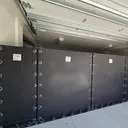
Flood panels are removable, watertight barriers that install over doorways, garage openings, elevators, floor drains, windows, and other entry points when a flood event is approaching. They are stored compactly when not in use and deployed in minutes by a small team.
Flood panels are one of the most popular types of flood barriers because they offer serious protection without permanently altering the look or function of a building. FRA’s patented Flood Panel system delivers proven flood protection without compromising the look or function of your property.
Key features include:
- American-made and custom-fabricated to fit each opening with precision
- Tested to withstand Category 5 hurricane conditions
- Lightweight, corrosion-resistant aluminum construction
- Quick deployment – no specialized tools required
- Compact storage when not in use
- Low-profile design that preserves curb appeal and daily access
2. Flood Gates and Flood Doors
Flood gates and flood doors provide permanent, built-in protection that becomes part of the building itself. There are several variations within this category:
- Swing-Hinged Flood Gate – Operates like a normal gate during everyday use and seal watertight when a flood event approaches. They are ideal for parking garages, loading bays, and entry points that need daily access but full protection during an event.
- Passive Automatic Floodgate – Activates on their own when floodwaters rise, requiring no human intervention, no electricity, and no manual operation, which makes them a strong fit for properties where staff may not be on site when flooding begins.
- Permanent Flood Doors – Replaces standard entry doors with watertight, hydrostatically load-tested doors that provide 24/7 passive flood defense without any deployment step. They are tested to ANSI/FEMA 2510-2020 standards and maintain safe, code-compliant access for everyday use.
3. Water-Filled and Aqua-Fabric Flood Barriers
FRA offers two deployable perimeter flood barrier solutions designed to protect larger footprints, including building perimeters, equipment yards, temporary work sites, and properties without permanent flood protection. Both options are filled or activated on site and can be repositioned, stored, and reused as needed.
- Water-Filled Barriers – Reusable, heavy-duty perimeter barriers filled on site using available water sources. Ideal for large-scale deployments where weight and stability are critical, such as industrial sites, commercial properties, and extended perimeters.
- Aqua-Fabric Barriers – A portable, rapidly deployable solution built for speed and ease of use. Key advantages include:
- One-person deployment in minutes – no heavy equipment required
- Up to 100x faster installation than sandbags
- Compact storage and easy transport
- Built for repeated reuse across multiple events
- No environmental cleanup required after a flood event
- Especially well-suited for municipal sites, warehouses, and properties without permanent perimeter protection
4. Specialty Flood Covers and Equipment Protection
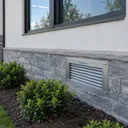
Not every flood threat comes through a doorway. Some of the most costly flood damage happens to specific pieces of infrastructure, such as electrical equipment, elevators, pool pumps, floor drains, and underground spaces.
FRA manufactures targeted protection products for these vulnerable points, including:
These products are often used alongside the larger types of flood barriers above to create a layered, complete defense for a property.
How to Choose the Right Types of Flood Barrier
With so many options on the market, the right choice depends on a few specific factors:
- Property type – A single-family home, a 20-story condo, and a hospital all need different protection strategies.
- Deployment time – How much warning do you typically have before a flood event? Properties with limited warning benefit from passive or permanent solutions.
- Staffing and operations – If your facility cannot dedicate staff to deploying barriers during an emergency, automatic or permanent options reduce risk.
- Flood source – Storm surge, riverine flooding, flash flooding, and stormwater backup each behave differently and call for different barrier types.
- Budget and timeline – Some products are a higher upfront investment with lower long-term operating costs, while others are more affordable upfront but require ongoing labor to deploy.
Working With a Flood Protection Specialist
The most effective flood protection plans almost always combine multiple types of flood barriers rather than relying on a single product. A doorway barrier alone will not help if water enters through a garage. A floodgate without elevator protection still leaves a building vulnerable to costly downtime. That is why FRA’s process starts with an on-site flood risk assessment to identify every vulnerable point on a property and design a layered solution tailored to that specific building.
Whether your priority is a quick-deploy panel system, a permanent flood door that works around the clock, or a portable barrier for large perimeters, there is a flood protection product engineered to fit. Understanding the types of flood barriers available is the first step toward choosing the right one.
To learn more about FRA’s full portfolio of flood protection products or to schedule a flood risk assessment for your property, contact our team today.